
When people first hear the word “endocannabinoid,” it can sound like something you would find on a dispensary shelf or in a wellness product. We understand the confusion. After all, the word “cannabinoid” is often associated with cannabis, CBD, THC, or hemp products.
But endocannabinoids are not something you buy; they are molecules your body makes naturally.
Endocannabinoids are part of a larger biological system called the endocannabinoid system, or ECS, which helps the body maintain balance across many major systems. In biology, this balance is called homeostasis.
Think of homeostasis as your body’s ability to keep things steady, even when the world around you is constantly changing. Your body is always working to keep your temperature, mood, appetite, sleep, pain response, immune activity, and stress response within a functional range. The endocannabinoid system is one of the systems helping to make that possible.
The endocannabinoid system: a communication network
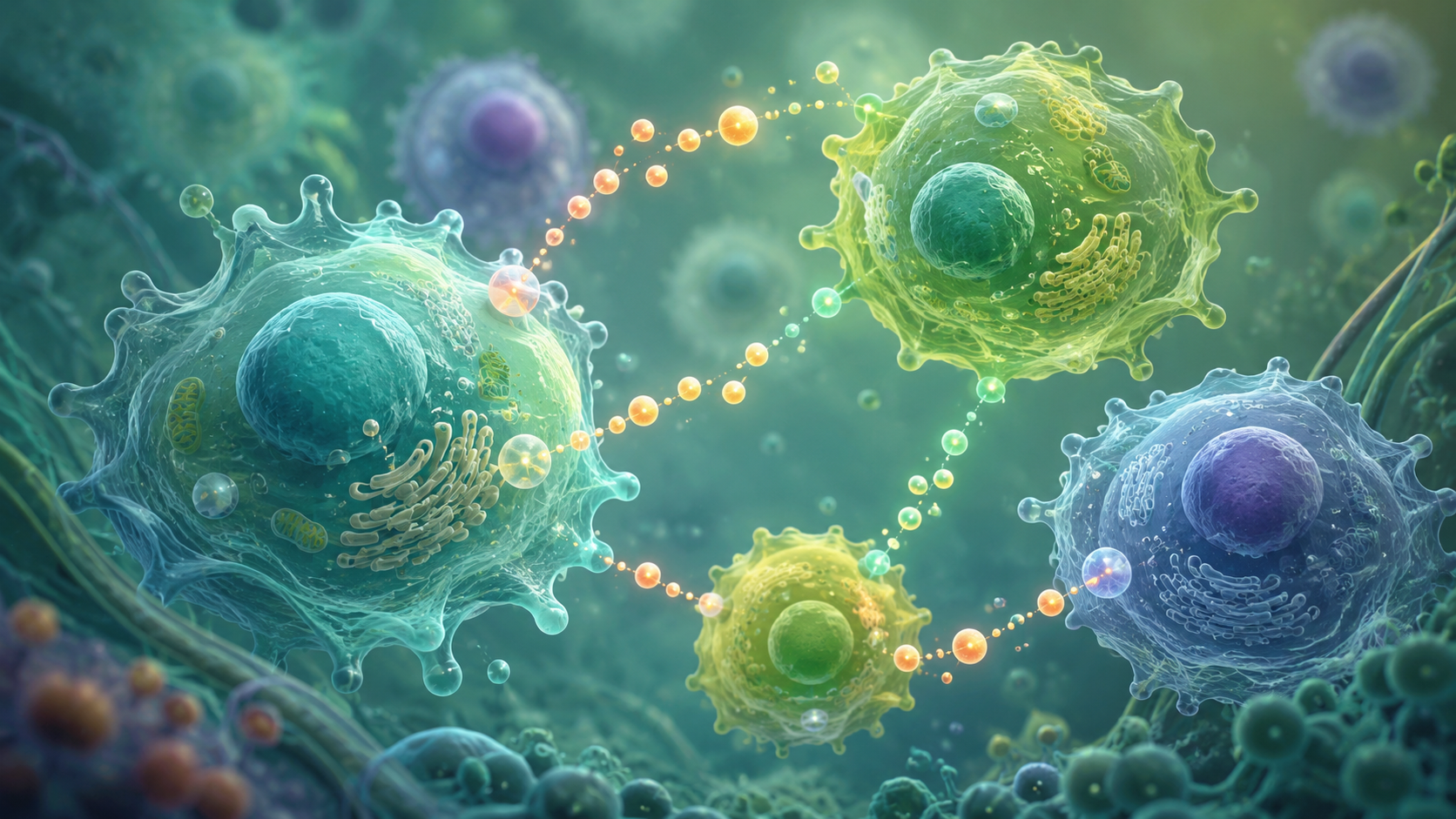
The ECS is a cell-signaling system, meaning it helps cells communicate with each other.
Cell signaling is how one cell sends a message and another cell receives it. Just like hormones, neurotransmitters, and immune signals help coordinate what happens in the body, endocannabinoids help deliver messages that influence how cells behave.
The ECS includes three main parts:
- Endocannabinoids: messenger molecules made by the body
- Cannabinoid receptors: receiving sites found on or near cells
- Enzymes: proteins that build and break down endocannabinoids
A helpful way to picture this is a lock-and-key model. Endocannabinoids are like keys, where cannabinoid receptors are like locks. When the right “key” interacts with the right “lock,” it can influence what happens inside or around the cell.
Then, once the message has been delivered, enzymes help break the endocannabinoid down. This is important because endocannabinoids are usually made when needed and used quickly, rather than being stored in large amounts for later use.
What does “endocannabinoid” mean?
Endo means “within” or “inside.”
Cannabinoid refers to molecules that interact with cannabinoid receptors.
Therefore, an endocannabinoid is a cannabinoid-like molecule made within the body.
The two best-known endocannabinoids are:
Anandamide (AEA)
2-arachidonoylglycerol (2-AG)
Anandamide was the first endocannabinoid discovered. Its name comes from the Sanskrit word “ananda,” meaning bliss, because of its relationship to mood, reward, and well-being. But anandamide is not simply a “happiness chemical.” Like most molecules in the body, it has many jobs and works differently depending on where, when, and how it is acting.
2-AG is another major endocannabinoid. It is found throughout the body and is especially important in cell signaling. Together, anandamide and 2-AG help regulate communication in the brain, immune system, nervous system, and other tissues.
Where are endocannabinoids found?
Endocannabinoids and the broader ECS are found throughout the body, including the brain, spinal cord, immune cells, skin, bones, fatty tissue, liver, heart, blood vessels, muscles, and gastrointestinal tract.
That wide distribution helps explain why the ECS is involved in so many different processes, including:
- Pain response
- Mood
- Memory
- Appetite and metabolism
- Stress response
- Sleep
- Inflammation
- Immune function
- Reproductive function
- Bone development
- Neurotransmitter signaling
This does not mean the ECS “controls everything.” Rather, it helps regulate many systems by supporting communication and balance.
How do endocannabinoids work?
One of the most important roles of endocannabinoids is helping cells adjust communication when activity is too high, too low, or out of balance.
In the nervous system, endocannabinoids often work a little differently than many familiar neurotransmitters. Many neurotransmitters travel from a sending neuron to a receiving neuron. Endocannabinoids can work in the opposite direction. They may be made by the receiving cell and travel backward to the sending cell, helping regulate how much neurotransmitter gets released. This is part of why the ECS is often described as a balancing system.
What are CB1 and CB2 receptors?
The two most talked-about cannabinoid receptors are called CB1 and CB2.
CB1 receptors are found in high levels in the brain and central nervous system, though they are also present in some peripheral tissues. These receptors are involved in functions such as mood, memory, pain perception, appetite, and nervous system signaling.
CB2 receptors are found largely in immune cells and peripheral tissues. These receptors are often discussed in relation to inflammation and immune regulation.
Endocannabinoids can interact with these receptors to help send messages throughout the body. Plant cannabinoids, such as THC and CBD, can also influence this system, but they do so in different ways.
THC can activate cannabinoid receptors, especially CB1 receptors, which is part of why it can have intoxicating effects. CBD does not bind strongly to CB1 or CB2 receptors in the same way. Instead, it appears to influence the ECS more indirectly, including by affecting endocannabinoid tone, receptor activity, and other signaling pathways.
This is why plant cannabinoids can sometimes support or influence the ECS, but they are not the same thing as endocannabinoids.
Endocannabinoids vs. phytocannabinoids
Endocannabinoids are made by your body; phytocannabinoids are made by plants.
“Phyto” means plant. So phytocannabinoids are cannabinoids that come from plants, including cannabis and hemp. THC, CBD, CBG, CBC, and many others are phytocannabinoids.
Your body does not need cannabis to have an endocannabinoid system as the ECS is already there. It is part of human biology and found in all vertebrate species.
Cannabis helped scientists discover the system because researchers were trying to understand how THC worked in the body. That research eventually led to the discovery of cannabinoid receptors and then the discovery of the body’s own cannabinoid-like molecules, endocannabinoids. In other words, the plant helped reveal a system that was already inside us.
Why does the body make endocannabinoids?
The body makes endocannabinoids to help maintain balance. For example, if the body is experiencing stress, injury, inflammation, pain, hunger, or changes in sleep, the ECS may become involved in the response. Endocannabinoids can be made “on demand” from components of cell membranes, used locally, and then broken down by enzymes. They are made when and where they are needed, then cleared away.
Anandamide is primarily broken down by an enzyme called FAAH. 2-AG is primarily broken down by an enzyme called MAGL, along with other enzymes.
This build-use-breakdown rhythm helps keep the system responsive and precise.
Can someone be low in endocannabinoids?
Researchers have explored the concept of clinical endocannabinoid deficiency, which suggests that some people may have lower endocannabinoid tone or altered ECS signaling that contributes to certain hard-to-treat conditions.
This concept has been discussed in relation to conditions such as migraine, fibromyalgia, irritable bowel syndrome, endometriosis, depression, anxiety, and other complex conditions. However, this area of research is still developing. It is not as simple as taking one test, seeing that you are “low,” and replacing endocannabinoids like a vitamin.
The ECS is dynamic, changing based on stress, inflammation, hormones, diet, sleep, movement, illness, and other factors. That is why education and individualized support matter.
Can you buy endocannabinoids?
No, not in the way people usually mean. Endocannabinoids are biological molecules with specific roles in the body. They are not the same as CBD oil, hemp extract, cannabis flower, edibles, or supplements. What people can buy are products that contain phytocannabinoids, such as CBD or THC, which may interact with or influence the endocannabinoid system.
Why does this matter?
Understanding endocannabinoids helps take the mystery out of cannabinoid therapy. When we talk about cannabis, hemp, CBD, THC, or other plant-based therapies, we are really talking about how outside compounds may interact with an internal system that already exists.
The more we understand the basics, the better prepared we are to ask thoughtful questions, make informed decisions, and have productive conversations with healthcare providers.
At Realm of Caring, our goal is to help individuals and families move from confusion to clarity. Whether you are brand new to cannabinoid therapy or trying to better understand the science behind it, we are here to help you navigate the information with research, care, and practical support.
For more information about the endocannabinoid system and whether cannabinoid therapy may be right for you, contact a Realm of Caring Care Specialist, for free, today.