By: Sasha Kalcheff-Korn
July is National Hemp Month. For me, there is no better way to recognize it than by returning to the story of one child who helped change what was possible for millions of others.
On July 19, 2012, Heather Jackson gave her son Zaki his first dose of CBD.
Zaki had lived with severe epilepsy since infancy. Over the years, Heather watched him experience multiple types of seizures. Just before the age of five, Heather had documented Zaki having just over 500,000 seizures. Some caused him to suddenly lose muscle control and fall to the ground; some were brief and violent, like paddles to the chest as if they were full-body electrocutions. Others left his body rigid and his lips and nailbeds blue because he had stopped breathing until the seizure ended. By 2012, after nearly a decade of treatments, 17 pharmaceuticals, hospital visits, and uncertainty, Zaki was receiving palliative hospice services.
The night of the first CBD dose, Zaki was having seizures every two to ten minutes. Heather snuggled in next to him on his makeshift hospice bed. She administered the oil by syringe and stayed awake watching him.
Zaki slept through the night. It was the first seizure-free night he had experienced in years. This led to a 48-hour seizure-free period, where typically around 300 seizures would have been experienced in this timeframe.
Fourteen years later, Zaki’s story is not simply one of a child who responded to hemp-derived CBD. It is the story of what a family chose to do with the hope they had been given.
From One Family to Thousands
Heather could have understandably closed the door behind her and focused only on rebuilding her own family’s life. Instead, she began answering calls from other parents.
They were parents who were scared, exhausted, and often out of options. They wanted to know what Heather had used, how she had approached it, what questions they should ask, and whether there might still be something left to try. These early conversations became part of the foundation of Realm of Caring.
Realm of Caring was built to help families navigate what Heather had once been forced to navigate largely alone. What began as parents helping parents grew into a nonprofit committed to education, research, and advocacy for people exploring cannabinoid therapies.
The organization has since supported tens of thousands of individuals and families. It has helped people understand products, dosing considerations, drug interactions, research participation, and how to have more informed conversations with healthcare providers. It has also worked alongside researchers to turn individual experiences into evidence that can benefit a much broader population. A personal story can open a door, but research helps keep it open.
Heather has always understood that helping one child was not enough. Families needed trustworthy information. Physicians needed data. Researchers needed access to real-world experiences. Policymakers needed to understand that the consequences of their decisions were not theoretical. Behind every law, study, and debate were people like Zaki.
Healing the Child and the Caregiver
When a child is seriously ill, the entire family lives inside that illness. Parents learn medical terminology, medication schedules, emergency protocols, and the particular sounds that mean something is wrong. They become caregivers, researchers, advocates, and protectors, often while carrying grief that has nowhere to go. The crisis may center on the child, but the trauma does not stop there.
Heather has increasingly committed herself to understanding grief and helping others recognize what it means to heal not only the person they love, but themselves.
Caregivers can spend years believing that their own survival is secondary. They postpone rest, relationships, health, and any processing of what they have witnessed. Even when the immediate crisis changes, the body and mind may continue responding as though the emergency is still happening.
Healing asks us to acknowledge what was lost, even when the person we love is still here. It asks us to release the version of the future we once expected. It asks us to recognize that hope and grief can exist at the same time. And sometimes, it asks the caregiver to finally include themselves among the people worthy of being saved.
As Heather recalls, “Saving my son’s life became my sole purpose. It took me years to realize I needed to find my way back to my own healing.”
Heather’s willingness to explore grief reflects the same instinct that led her to begin answering calls from other families: when she learns something that may help, she shares it.
Returning to the Plant
The hemp plant did not arrive in the Jackson family’s life as a trend, a business opportunity, or a political talking point. It arrived as a source of possibility when traditional options had been exhausted. This is a history that should inform how we talk about hemp today.
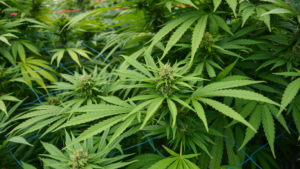
Hemp is a plant with agricultural, environmental, industrial, and therapeutic potential. For families like the Jacksons, however, its meaning is also deeply personal. It represents nights of sleep after years without them. It represents developmental milestones once believed to be out of reach. It represents the ability to imagine a future again.
The intention was never to build an unregulated marketplace of increasingly intoxicating products. Nor should the answer to problems within that marketplace be to eliminate responsible access to non-intoxicating, full-spectrum CBD.
Millions of Americans now use these products to support concerns such as seizures, pain, sleep, anxiety, and overall quality of life. Current federal proposals could impose THC limits so restrictive that many full-spectrum CBD products would no longer be legally available, even when they are non-intoxicating and responsibly manufactured.
We can support stronger testing, labeling, age restrictions, and consumer protections without abandoning the patients who established this path.
Heather notes that “Every policy discussion eventually comes back to a real family. I know this because we are one of them. The plant entered our lives with a very clear purpose: to help restore what illness had taken from our family. Protecting hemp means remembering that purpose and creating responsible policies that preserve access for the people who still depend on it. Their life could depend on it. Ours does.”
Fourteen Years Later
Zaki’s first dose was administered on July 19, 2012.
At the time, Heather did not know that the decision would help launch an organization, contribute to a national conversation, support years of research, or guide families she had never met. She was simply a mother trying to help her son.
I have had the privilege of becoming Heather’s friend and of helping carry forward what she began. Much of my role at Realm of Caring is to serve as a conduit: between patients and researchers, families and physicians, lived experience and public policy.
The longer I do this work, the more certain I become that healing rarely belongs to one person alone. One person finds relief. A family begins to breathe. A mother answers another mother’s call. Experiences become data. Data becomes education. Education changes policy. And a pathway that once seemed impossible becomes available to someone else. That is the legacy of Zaki’s journey. But the journey did not end with seizure relief or with the founding of Realm of Caring.
As medicine advanced, Zaki’s condition was given a more precise name: CSNK2B-neurodevelopmental disorder or POBINDS, a rare genetic condition that usually involves epilepsy, developmental differences, movement challenges, and other complex needs. A diagnosis can bring answers, but for families living with a rare disorder, it also reveals how much remains unknown.
Heather’s work now focuses on ensuring that no family facing a CSNK2B diagnosis has to navigate it alone. Through the CSNK2B Foundation, she is building a global community, accelerating research, and connecting families with the information and support they need. The CSNK2B Foundation is working to bring affected families, clinicians, and researchers together to expedite the search for treatments and ultimately pursue a cure.
This is another form of the same promise Heather made years ago: once her family found information that could help, they would not keep it to themselves.
Her journey through caregiving and grief also led her to consider a question that is often left unasked: what happens after survival?
Saving someone we love does not automatically resolve the fear, grief, or trauma accumulated along the way. For Heather, exploring that question eventually expanded beyond cannabinoids and led to the creation of Unlimited Sciences, a nonprofit advancing real-world research and science-backed education around natural psychedelic experiences.
The organization applies many of the lessons first learned through Realm of Caring: listen to people, collect their experiences responsibly, investigate potential benefits and risks, reduce harm, and make credible information available to those trying to make informed decisions.
While Realm of Caring grew from the search to help heal Zaki’s body, Unlimited Sciences reflects another part of Heather’s evolution, the search to understand how people process grief, trauma, identity, and the experiences that reshape a life.
Neither journey is about suggesting that one plant or experience can resolve every form of suffering. They are about remaining curious, approaching natural medicines with respect, and allowing research and lived experience to inform one another.
Protecting the Path Forward
This National Hemp Month, we are asking our community to protect the pathway that made Zaki’s journey possible.
Visit Realm of Caring’s Save Hemp page to learn what is at stake, contact your representatives, and share why continued access to safe, non-intoxicating hemp products matters to you or someone you love.
Fourteen years ago, one family found hope in a plant. What they did with that hope has helped thousands of others begin healing, too.
Protect patient access: Visit Realm of Caring’s Save Hemp page at realmofcaring.org/save-hemp
Continue Zaki’s journey: Learn about CSNK2B, connect with affected families, and support the search for treatments and a cure at CSNK2B.org
Explore Heather’s work beyond survival: Learn how Unlimited Sciences is advancing real-world psychedelic research, evidence-based education, and compassionate harm-reduction support at UnlimitedSciences.org