The thyroid may be small, but the hormones it produces influence processes throughout the body, including metabolism, energy, heart rate, body temperature, digestion, mood, and bone health. According to the American Thyroid Association, an estimated 20 million Americans have some form of thyroid disease, and many may be unaware that they have it.
As interest in cannabidiol (CBD) continues to grow, researchers are working to understand how cannabinoids interact with the endocrine system, to include the thyroid gland. Although the evidence remains preliminary, studies involving the endocannabinoid system, cannabinoid receptors, inflammation, and thyroid hormone regulation are helping scientists identify new areas for investigation.
Understanding Thyroid Function
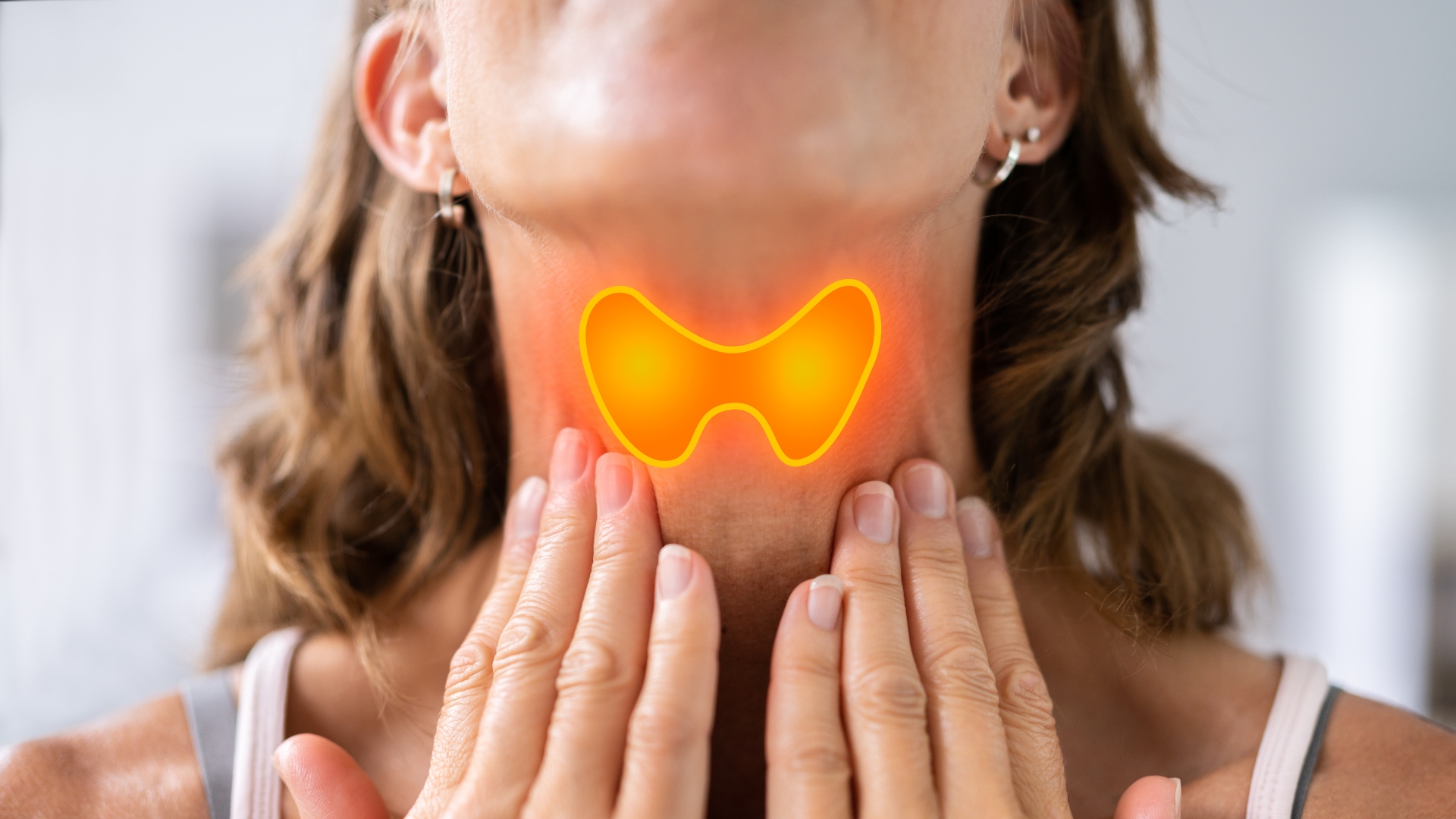
The thyroid is a butterfly-shaped endocrine gland located in the front of the neck. It produces hormones, primarily thyroxine (T4) and triiodothyronine (T3), that help regulate how the body uses energy.
Thyroid conditions can include:
- Hypothyroidism, or an underactive thyroid
- Hyperthyroidism, or an overactive thyroid
- Hashimoto’s thyroiditis
- Graves’ disease
- Thyroid nodules and tumors
- Thyroid cancer
An underactive thyroid may cause fatigue, cold sensitivity, constipation, depression, weight gain, dry skin, or hair changes. An overactive thyroid may contribute to a racing heart, anxiety, difficulty sleeping, heat intolerance, muscle weakness, increased sweating, or unintentional weight loss.
These symptoms can overlap with many other conditions. Thyroid disorders should therefore be evaluated through appropriate medical care and laboratory testing rather than symptoms alone.
The Endocannabinoid System and Homeostasis
The endocannabinoid system, or ECS, is a cell-signaling network that helps regulate numerous physiological processes. These include appetite, mood, sleep, pain perception, immune activity, energy use, and the body’s response to stress.
One of the ECS’s broader functions is supporting homeostasis: the body’s ongoing effort to maintain a stable internal environment as circumstances change.
The ECS includes internally produced endocannabinoids, enzymes that create and break them down, and receptors such as CB1 and CB2. A comprehensive review of the ECS and endocrine system describes how cannabinoid signaling may influence several hormone-producing systems, including the hypothalamus, pituitary gland, adrenal glands, reproductive organs, pancreas, and thyroid.
CBD interacts with this system differently from THC. Rather than strongly activating CB1 receptors, CBD appears to influence several receptors, enzymes, and signaling pathways. This has led to CBD being described as a regulator or modulator.
However, “supporting balance” does not mean that CBD automatically raises hormones that are too low or lowers hormones that are too high. Homeostasis is a complex biological process, and researchers have not established that CBD can correct thyroid dysfunction in humans.
What Have Researchers Found in the Thyroid?
Scientists have identified cannabinoid receptors in thyroid tissue. A 2015 human tissue study examined CB1 and CB2 receptor expression in benign and malignant thyroid lesions. The researchers found differences in receptor expression among tissue types, suggesting that the ECS may be involved in thyroid biology and disease processes.
These findings do not demonstrate that CBD treats thyroid nodules or thyroid cancer. They do, however, show that cannabinoid signaling is present in thyroid tissue and may be biologically relevant.
Earlier animal research also found that THC could affect thyroid hormone concentrations and iodine accumulation. These findings demonstrate that cannabinoids may interact with the hypothalamic-pituitary-thyroid axis, but the effects of THC should not be assumed to represent the effects of CBD. Results from animal studies also cannot be applied directly to human treatment.
The 2022 CBD and Thyroid Study
A 2022 preclinical study investigated CBD in rats whose vitamin D deficiency was induced through diet. Vitamin D signaling is relevant to bone health, immune function, and thyroid physiology. Vitamin D deficiency has also been observed in association with some thyroid disorders.
Researchers reported that CBD administration was associated with changes in:
- T3 and T4 thyroid hormone levels
- Calcitonin
- CB2 receptor expression
- Vitamin D receptor expression
- Vitamin D metabolites
Based on these findings, the authors proposed that CBD influenced communication among cannabinoid signaling, vitamin D pathways, and thyroid function.
This study offers an interesting window into how CBD may affect interconnected regulatory systems rather than one isolated symptom or organ. It also supports further investigation into CBD’s possible role as a physiological modulator.
There are important limitations, however. The research involved an animal model of diet-induced vitamin D deficiency. It was not a clinical trial involving people with Hashimoto’s disease, Graves’ disease, hypothyroidism, or other diagnosed thyroid conditions. It therefore cannot establish an effective human dose, prove that CBD treats thyroid disease, or show that CBD can replace thyroid medication.
Could CBD Help With Thyroid-Related Symptoms?
CBD has been researched separately for concerns that may also be experienced by people with thyroid disorders, including anxiety, disrupted sleep, discomfort, and inflammatory processes. Someone may therefore use CBD to address a particular wellness goal without CBD directly treating the underlying thyroid condition. Individuals using CBD should continue recommended thyroid testing and should discuss with their physician before reducing or discontinuing prescribed medication. Changes in CBD use, product type, or serving size may also be relevant when reviewing medications and laboratory results.
Research Is Still Developing
Existing studies show that the ECS participates in endocrine regulation, that cannabinoid receptors are present in thyroid tissue, and that CBD influenced thyroid- and vitamin D-related markers in one animal model. Together, these findings provide a scientific basis for continued research.
What we do not yet have are robust human clinical trials showing that CBD can prevent, reverse, or treat thyroid disease.
For now, CBD is best viewed as one potential part of a broader, individualized wellness plan, not as a replacement for diagnosis, laboratory monitoring, prescribed treatment, or ongoing medical care.
There is a lot to consider when exploring cannabinoid therapy, including product quality, cannabinoid profile, serving size, medications, health history, and personal goals. Realm of Caring’s care specialists provide free, one-on-one education to help individuals have informed conversations with their healthcare teams. Contact us at 719-347-5400 or [email protected] for support.