
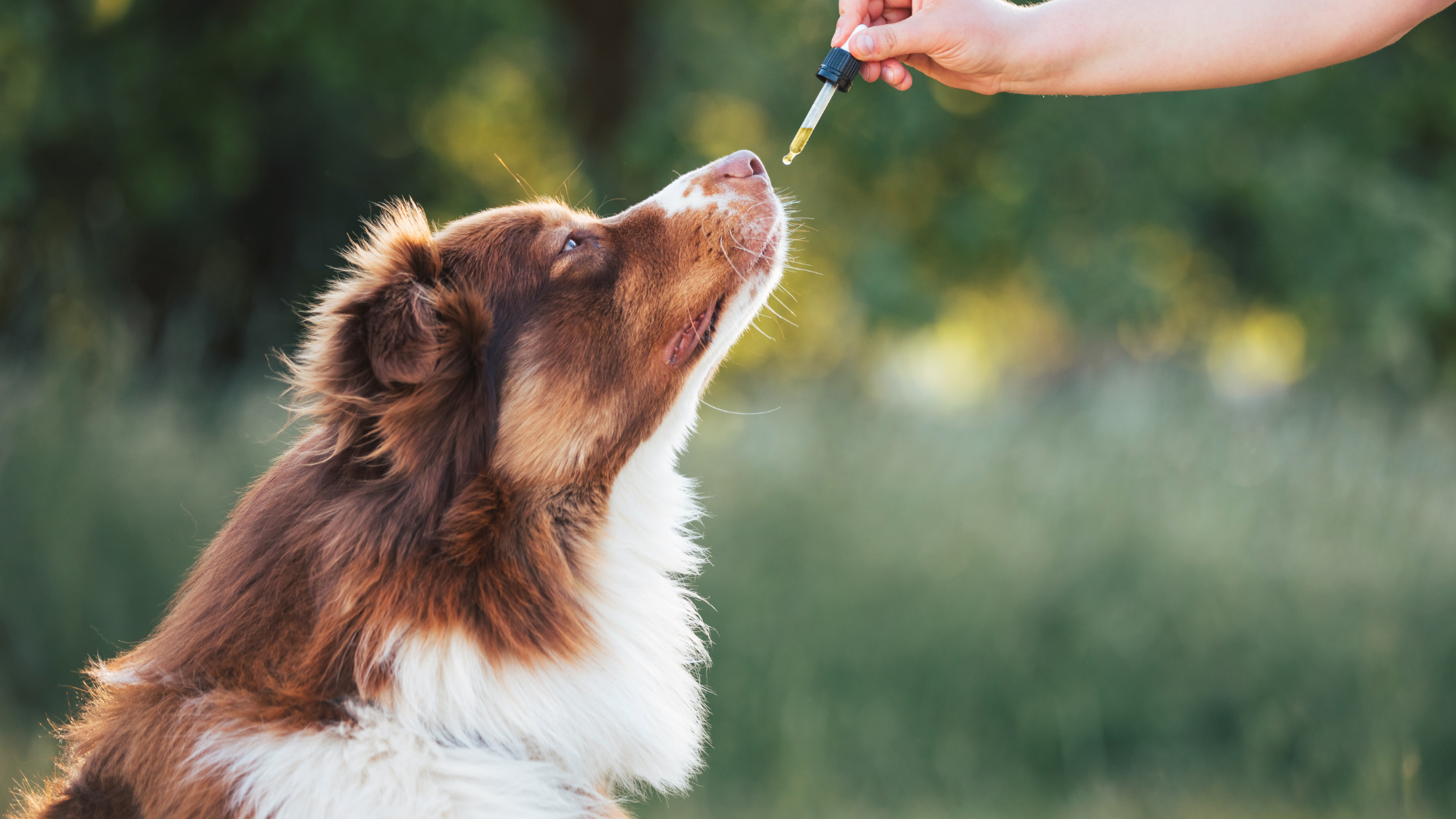
More families than ever are asking thoughtful questions about plant-based therapies, not just for themselves, but for the animals they love. As CBD becomes increasingly common in human wellness routines, many pet owners are wondering: Could this also support my dog’s quality of life?
What is CBD and How May it Help Dogs?
While enthusiasm has grown quickly, science is still catching up. What we do know is encouraging but rather nuanced. Like humans, dogs have an endocannabinoid system (ECS), a regulatory network involved in maintaining balance across mood, inflammation, immune function, and pain perception. Cannabidiol (CBD), a nonintoxicating compound derived from Cannabis sativa L. (commonly known as hemp), interacts with this system in ways researchers are actively working to better understand.
Cornell University’s College of Veterinary Medicine provides guidelines for veterinarians who wish to discuss CBD with clients, emphasizing the importance of high quality, hemp-derived products with low THC content (for example: full-spectrum products) while research continues to unfold. They also note the importance of checking regulatory guidelines for the state/country you reside in.
Below, we take a careful look at what current research suggests about CBD for dogs to include where the evidence is promising, where questions remain, and how to approach this topic thoughtfully and responsibly.
Potential Benefits of CBD for Dogs
- Support for Aging Dogs and Behavioral Changes
A 2025 study observed survey data from the Dog Aging Project (DAP), which contained dog data from 47,444 owners. Researchers found that 2,592 dogs were reported to infrequently or frequently use CBD. The average age for frequent use was 10.2 years and most often for chronic conditions such as dementia, osteoarthritis, epilepsy, hip dysplasia, cancer, chronic diarrhea, and GI disorders. A consistent long-term use comparison, with 331 dogs using consistently for at least 2 years and 17,399 consistently not using for at least 2 years showed that those dogs using CBD long-term had significant decreases in aggression, reactions to unfamiliar circumstances, and reaction to animals.
- Mobility and Joint Comfort
Mobility issues are common in older dogs, and early research suggests CBD may help support joint comfort. A 2024 doubleblind, placebo-controlled study evaluated CBD with and without NSAIDs in dogs with mobility disorders to understand the cannabinoids potential role in improving comfort and movement. When compared to baseline, the dogs receiving CBD oil in the study showed a significant increase in both moderate and total activity counts. Though promising, more research is needed to determine optimal dosing and safety considerations when co-administered with NSAIDs and other medications.
- Pain
A 2023 review highlights the safety profile and potential benefits of CBD in canine osteoarthritics (OA). For dogs undergoing treatment for OA, utilizing full-spectrum CBD oil appeared to reduce pain severity and interference scores. Few adverse events were reported, but included vomiting and asymptomatic increase in alkaline phosphatase levels.
Less is understood about THC-dominant products, however an Argentinian study published in 2023 observed phytocannabinoids as veterinary medicine. The most prevalent condition was pain among dogs of which 97% were treated with either a THC dominant or 1:1 (CBD:THC) ratio formulation. Following consistent administration, 37% showed significant improvement after 15 days of treatment and 80% showed significant improvement after 60 days of treatment using the THC dominant formula. Those treated with the 1:1 ratio formula saw a significant improvement of 75% after 15 days.
It is important to note that THC sensitivity in dogs differs significantly from humans, and improper dosing may lead to unwanted or adverse effects. Any THC-containing product should only be considered under direct veterinary supervision.
- Anxiety Related Behaviors
Some owners use CBD to help dogs cope with stressors like fireworks, travel, or separation. While large-scale studies show mixed results, a 2023 published study aimed to understand the effect of single-dose, THC-free CBD distillate for dogs left alone in the car while traveling. Some results indicated significant reduction in canine stress compared to the placebo group. However, another study concluded no statistically significant changes in behavior of dogs when treated with CBD twice per day, although a reduction in aggressiveness and discomfort was realized. Mixed findings highlight the importance of individualized approaches when considering cannabis-based therapies for anxiety-related disorders among dogs.
- Support for Dogs with Seizures
The anticonvulsant effect of CBD has been confirmed across several animal and human trials, gaining attention from the veterinary practitioner community given that idiopathic epilepsy is the most common neurological condition amongst dogs. Findings show a ≥50% reduction in epileptic seizure frequency and is recognized as safe and well-tolerated.
Is CBD Safe for Dogs?
While findings across conditions vary in strength, a consistent theme emerges: CBD appears generally well tolerated in dogs, but standardized dosing, long-term safety data, and drug interaction research remain ongoing priorities. When exploring this option for your dog, consider:
- Having a conversation with your veterinarian and taking an individualized approach, especially if your dog is taking other medications.
- Choosing products with third party lab testing to verify cannabinoid content and screen for contaminants.
- Beginning therapy with a broad or full-spectrum formulation, starting with low amounts and increasing slowly over time.
Veterinary researchers note that dosing and drug interactions remain areas where more data is needed.
Choosing a High Quality CBD Product for Dogs
When selecting CBD for your dog, look for:
- Organically grown hemp
- Clear labeling and ingredient transparency
- Certificates of Analysis (COAs) from independent labs
- Additives in products
- Avoid products marketed with cure claims
- Verify THC content (especially under 0.3% unless directed by a veterinarian
- Confirm batch-specific COAs
In Summary
CBD is not a cure-all, and it is not a replacement for appropriate veterinary care. However, emerging research suggests it may offer meaningful support for some dogs experiencing age-related changes, mobility concerns, seizures, or stress-related behaviors. As with any therapeutic approach, the key lies in informed decision-making by prioritizing product quality, veterinary guidance, and individualized care.
If you are exploring CBD for your dog and have questions, Realm of Caring’s Care Team is available to help you think through the research, product considerations, and safety factors. While we do not provide veterinary medical advice, our team can help you better understand the current evidence and prepare for informed conversations with your veterinarian.
As research continues to evolve, our collective responsibility is to pair curiosity with caution, compassion with science. Our dogs depend on us to make thoughtful choices on their behalf and that means staying grounded in evidence while remaining open to innovation.