By Bonni Goldstein, MD
View the featured webinar here
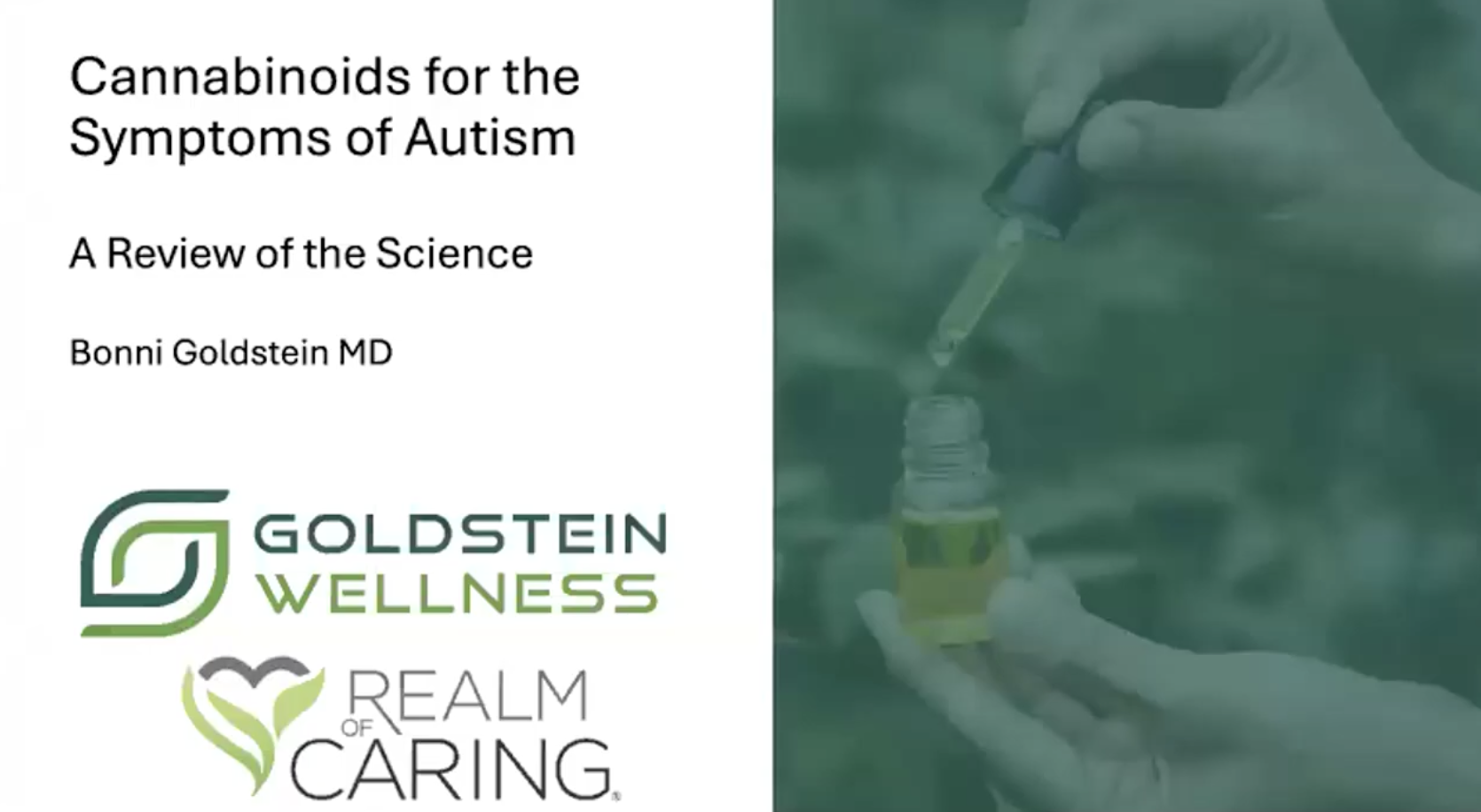
Dr. Goldstein’s recent presentation explored the emerging evidence on the role of cannabinoids in managing symptoms associated with Autism Spectrum Disorder (ASD). She highlighted both the scientific foundation and her own clinical experience with cannabinoid-based therapies in her pediatric patients.
Background
Autism Spectrum Disorder is a complex neurodevelopmental condition often accompanied by behavioral, social, and medical challenges. There are two FDA approved medications which unfortunately offer limited benefits and can cause significant short- and long-term side effects. There has been significant interest in targeting the body’s endocannabinoid system (ECS) in individuals struggling with challenging symptoms of autism as this widespread system helps regulate mood, focus, sleep, immune response, and inflammation.
The Endocannabinoid System and ASD
Research suggests that individuals with ASD may have imbalances in their ECS, including alterations in endocannabinoid and cannabinoid receptor levels. These differences are thought to contribute to neuroinflammation, disrupt immune function, and create gut-brain imbalances. Plant cannabinoids such as CBD and THC may help restore balance by reducing inflammation and enhancing brain-body communication through interactions with the ECS, promoting homeostasis.
Clinical Evidence
Dr. Goldstein reviewed numerous clinical trials and case studies:
- Children and adolescents with ASD treated with CBD:THC ratios (typically 20:1, with a few studies looking at higher and lower ratios) showed improvements in irritability, agitation, sleep, anxiety, social engagement, aggression, and speech/language.
- Studies report behavioral improvements in 61–93% of participants, with mild, manageable side effects such as drowsiness or appetite changes.
- Combination cannabinoid regimens may provide better results due to synergistic effects.
- Dr. Goldstein presented results from her research demonstrating that parent-reported behavioral improvements following medical cannabis treatment were associated with shifts in salivary biomarkers of aggression, inflammation, and other physiologic pathways toward neurotypical levels.
Clinical Pearls
Dr. Goldstein emphasized a personalized, methodical approach as there is no “one size fits all” for cannabinoid treatments.
- The scientific literature supports the use of CBD-dominant products first with the addition of other cannabinoids as needed.
- Challenges of aggression towards other or self or severe insomnia may require lower CBD:THC ratios.
- Watch for biphasic effects of CBD, as lower doses may be overstimulating while higher doses are often more calming.
- Adjusting doses on the weekends or while the child is under parental supervision is advised (i.e., it is not recommended to send your child to school on a new product or dose until you’ve seen how they respond at home)
Summary: Cannabinoid-based treatments show promise in addressing the behavioral and physiological challenges of ASD. They are safe and well-tolerated under medical supervision, and may reduce the need for traditional medications. Ongoing research continues to refine dosing, ratios, and cannabinoid combinations for individualized care.
Q and A:
Question: Does this mean cannabinoids that activate CB2R could cause improvements? THC activates CB1 and CB2. Tolerance means that CB1R decrease, but CB2R do not show tolerance. Could this mean that CB2R activation is important in regulating autism?
Answer: Yes. Activating CB2 receptors may help improve autism-related symptoms as they are involved in reducing inflammation and regulating the immune system. Since THC activates both CB1 and CB2 receptors, but only CB1 develops tolerance, the lasting effects may be linked more to CB2 activation. Beta-caryophyllene is a terpene (essential oil) found in many plants, including cannabis. This safe compound is unique in that it targets CB2 receptors without activating CB1 receptors, eliminating the risk of impairment and tolerance.
Question: How hard or expensive is checking ECS biomarkers?
Answer: It is quite easy to check biomarkers with the technology used in my research. The biotech company I partnered with to do this research, Cannformatics, has a testing kit that will be available in the next year. The test can be mailed to the patient’s home and requires the collection of a small amount of saliva. The kit is shipped to the testing facility and the results are emailed to the patient and their clinician.
Question: Do we have studies yet that explore cannabis use during pregnancy, and does use impact the fetus to be more likely born deficient in their endocannabinoids?
Answer: There are several studies that have explored the use of THC during pregnancy. It appears that use during pregnancy may result in lower birth weight, and possibly later issues with attention, behavior, and executive function. Interestingly, a 2024 study of 178,948 pregnancies found that prenatal use of cannabis was not associated with a later diagnosis of autism (Avalos, et al., 2024). There are no human studies that have investigated the use of CBD during pregnancy, however animal studies show some potential adverse effects on the fetus.
Question: What elements of full spectrum do you feel are enhancing autism benefits? cannabinoids and terpenes?
Answer: My patients with autism have benefitted from many different cannabinoids and terpene combinations. CBD+THC is by far the most common starting point for patients, as the scientific literature shows about 75% will have some therapeutic benefits with these two cannabinoids. I encourage parents to trial all the available cannabinoids to figure out the best regimen for their child’s needs. There are several terpenes that seem to help, including linlool, myrcene, beta-caryophyllene, borneol and others. Some CBD companies offer the addition of terpenes to their products to provide more customized formulations. Medical guidance can help tremendously when going through this journey!
Question: Here in Australia, there is a big concern around the use of high dose THC, particularly in patients with a potential for worsening paranoia and other symptoms, or in those who may be predisposed to developing schizophrenia. You mentioned that you do not judge the dose that patients take when reviewing the UK study on adult ASD patients. In your opinion, how can clinicians balance this risk with high dose THC in patients who may require it to function? Is there any correlation between ASD and the propensity to develop schizophrenic symptoms?
Answer: Medical cannabis use and recreational THC use are not comparable. Clinically supervised regimens rarely involve high-dose THC alone, as this can lead to tolerance and reduced therapeutic benefit. Most cannabis clinicians will recommend the inclusion of CBD as it can mitigate tolerance and often enhances beneficial effects (Sacco et al., 2024). The UK study on adults with ASD noted a preference for higher-THC products, likely due to prior cannabis use and existing tolerance rather than an initial medical recommendation for high-dose THC. While ASD and schizophrenia share some overlapping features, ASD itself does not increase the likelihood of developing schizophrenia. The current thought is that adolescents who are at risk for schizophrenia from THC are typically chronic heavy users with a genetic susceptibility, specifically a first-degree relative with schizophrenia or another significant mental health disorder.
Question: How do you respond to concerned parents who ask about the potential neurodevelopmental side-effects of THC in children?
Answer: The potential neurodevelopmental side effects that concern parents and some clinicians stem from studies on chronic, heavy recreational use of THC in teenagers, not from medically supervised and customized cannabinoid regimens. In medical settings, THC is titrated to the minimum effective dose, meaning the lowest dose that gives the best results without unwanted side effects. This minimizes risks and avoids impairment. In my experience, children using THC as part of a balanced regimen often demonstrate neurodevelopmental progress.
Question: Would you consider use of BCP in autism?
Answer: Yes. I have several patients who are using beta-caryophyllene for symptoms of autism, usually in combination with other cannabinoids.
Question: Regarding some studies showing that liver enzymes increase after cannabinoid use: should patients be concerned in using CBD, CBG, and/or THC long term to avoid liver injury?
Answer: In my clinical experience, full-spectrum CBD formulations rarely cause elevated liver enzymes unless patients are taking other medications that also stress the liver, such as certain anticonvulsants or chemotherapy. These patients should have bloodwork at least every 6 months. Elevations of liver enzymes are typically mild and completely reversible once CBD or the interacting medication is discontinued. It appears that purified high-dose CBD isolates are more likely to cause increases in liver enzymes compared to full-spectrum CBD. Currently, there are no published human reports linking CBG to liver injury, although one preclinical study showed low doses of CBG to be liver protective and much higher doses to cause injury (Snell and Tesch, 2021). Regarding THC, studies of medical cannabis patients do not show evidence of liver toxicity.
Question: Several of my patients with autism experience some hyperactivity when they start cannabis treatment. It usually lasts about a week, so I always tell the parents this can happen. Have you noticed something similar?
Answer: Yes, I have seen this as well. Studies show that low doses of CBD can be stimulating or alerting, which may worsen hyperactivity or agitation in children who are already overstimulated. Because treatment typically begins with low doses, preparing parents for this potential effect is helpful so that they don’t discontinue treatment too early. Conversely, CBD can be calming at higher doses, so if increased hyperactivity or behavioral issues occur, parents should be instructed to continue to titrate up the dose. Interestingly, when higher doses are reached, children may appear more relaxed or “mellow” for up to 7 days before getting used to the new dose. If a child remains overly sedated after a week on a higher dose, I recommend slowly reducing the dose to identify the level that provides the most benefit without unwanted drowsiness.
Bonni Goldstein, MD is the Medical Director of Canna-Centers Wellness & Education, a cannabis medicine specialty practice in Los Angeles, and the CEO of GoldsteinWellness.com, an educational platform dedicated to helping licensed healthcare professionals incorporate medical cannabis and hemp into their practices, as well as connect patients with knowledgeable practitioners.
Dr. Goldstein has evaluated thousands of patients for medical cannabis treatment over the past 18 years. She has a special focus on treating children with intractable epilepsy, autism, and cancer. She has co-authored numerous papers on the use of pharmacometabolomics to study the impact of medical cannabis on the behavioral symptoms associated with autism. Dr. Goldstein is the author of the book Cannabis is Medicine: How Medical Cannabis and CBD are Healing Everything from Anxiety to Chronic Pain. She is a medical advisor to numerous companies, including Cannformatics, Neurotech International LLC, and Weedmaps.com.
Sources:
Aran, A., Hacohen, M., Caspi, L., & Lavi, I. (2019). Brief report: Cannabidiol-rich cannabis in children with autism spectrum disorder and severe behavioral problems—a retrospective feasibility study. Journal of Autism and Developmental Disorders, 49(3), 1284–1288.
Aran, A., Eylon, M., Harel, M., Polianski, L., Nemirovski, A., Tepper, S., Bentur, Y., & Castellanos, F. X. (2019). Lower circulating endocannabinoid levels in children with autism spectrum disorder. Molecular Autism, 10(1), 2.
Aran, A., et al. (2021). Cannabinoid treatment for autism: A proof-of-concept randomized trial. Molecular Autism, 12(1), 6.
Avalos, L. A., Hendrick, C. E., Li, D.-K., Quesenberry, C. P., Gorman, J. R., & Croen, L. A. (2024). Maternal prenatal cannabis use and child autism spectrum disorder. JAMA Network Open, 7(10), e2440301–e2440301.
Bar-Lev Schleider, L., Mechoulam, R., Saban, N., Meiri, G., & Novack, V. (2019). Real life experience of medical cannabis treatment in autism: Analysis of safety and efficacy. Scientific Reports, 9(1), 200.
El-Sukkari, D., et al. (2023). Safety and efficacy of orally administered full-spectrum medicinal cannabis plant extract 0.08% THC (NTI-164) in children with autism spectrum disorder: An open-label study. MedRxiv. https://doi.org/10.1101/2023.12
Erridge, S., et al. (2022). Clinical outcome analysis of patients with autism spectrum disorder: Analysis from the UK Medical Cannabis Registry. Therapeutic Advances in Psychopharmacology, 12, 20451253221116240.
Fleury-Teixeira, P., Caixeta, F. V., Ramires da Silva, L. C., Brasil-Neto, J. P., Malcher-Lopes, R., & Ribeiro, A. M. (2019). Effects of CBD-enriched Cannabis sativa extract on autism spectrum disorder symptoms: An observational study of 18 participants undergoing compassionate use. Frontiers in Neurology, 10, 1145.
Fletcher, S., Arnold, C., Houghton, R., & Little, S. (2022). Medicinal cannabis in children and adolescents with autism spectrum disorder: A scoping review. Child: Care, Health and Development, 48(1), 33–44.
Hacohen, M., Aran, A., Eylon, M., & Meiri, G. (2022). Children and adolescents with ASD treated with CBD-rich cannabis exhibit significant improvements particularly in social symptoms: An open-label study. Translational Psychiatry, 12(1), 375.
Hurley, E. N., Cutshall, N. S., Eaton, E. A., Reisinger, D. L., Sutcliffe, J. S., & Anderson, A. E. (2022). Efficacy and safety of cannabidivarin treatment of epilepsy in girls with Rett syndrome: A phase 1 clinical trial. Epilepsia, 63(7), 1736–1747.
Karhson, D. S., Krasinska, K. M., Dallaire, J. A., Libove, R. A., Phillips, J. M., Chien, A. S., Garner, J. P., Hardan, A. Y., & Parker, K. J. (2018). Plasma anandamide concentrations are lower in children with autism spectrum disorder. Molecular Autism, 9(1), 18.
Kurz, R., & Blaas, K. (2010). Use of dronabinol (delta-9-THC) in autism: A prospective single-case study with an early infantile autistic child. Cannabinoids, 5(4), 4–6.
Mazza, J. A. de S., Knap, L. M., de Souza, M. P., Silva, A. L. B., & Crippa, J. A. (2024). Clinical and family implications of cannabidiol (CBD)-dominant full-spectrum phytocannabinoid extract in children and adolescents with moderate to severe non-syndromic autism spectrum disorder (ASD): An observational study on neurobehavioral management. Pharmaceuticals, 17(6), 686.
Pretzsch, C. M., et al. (2019). Effects of cannabidivarin (CBDV) on brain excitation and inhibition systems in adults with and without autism spectrum disorder (ASD): A single dose trial during magnetic resonance spectroscopy. Translational Psychiatry, 9(1), 313.
Sacco, R., Riccitelli, G. C., Disanto, G., Bogousslavsky, J., Cavelti, A., Czell, D., … & Zecca, C. (2024). Effectiveness, Safety and Patients’ Satisfaction of Nabiximols (Sativex®) on Multiple Sclerosis Spasticity and Related Symptoms in a Swiss Multicenter Study. Journal of Clinical Medicine, 13(10), 2907.
Siani-Rose, M., Cox, S., Goldstein, B., Abrams, D., Taylor, M., & Kurek, I. (2023). Cannabis-responsive biomarkers: A pharmacometabolomics-based application to evaluate the impact of medical cannabis treatment on children with autism spectrum disorder. Cannabis and Cannabinoid Research, 8(1), 126–137.
Silva Junior, E. A. da, et al. (2024). Evaluation of the efficacy and safety of cannabidiol-rich cannabis extract in children with autism spectrum disorder: Randomized, double-blind, and placebo-controlled clinical trial. Trends in Psychiatry and Psychotherapy, 46, e20210396.
Siniscalco, D., Sapone, A., Giordano, C., Cirillo, A., de Novellis, V., de Magistris, L., Rossi, F., & Maione, S. (2013). Cannabinoid receptor type 2, but not type 1, is up-regulated in peripheral blood mononuclear cells of children affected by autistic disorders. Journal of Autism and Developmental Disorders, 43(11), 2686–2695.
Snell, A., & Tesch, T. (2021). Cannabigerol Effects on Body and Liver Weights in Methionine-& Choline-Deficient Diet Induced NASH Mice Model.
Stolar, O., et al. (2022). Medical cannabis for the treatment of comorbid symptoms in children with autism spectrum disorder: An interim analysis of biochemical safety. Frontiers in Pharmacology, 13, 977484.
Zamberletti, E., Rubino, T., & Parolaro, D. (2021). Therapeutic potential of cannabidivarin for epilepsy and autism spectrum disorder. Pharmacology & Therapeutics, 226, 107878.
Zamberletti, E., Gabaglio, M., Woolley-Roberts, M., Cenini, G., Parolaro, D., & Rubino, T. (2019). Cannabidivarin treatment ameliorates autism-like behaviors and restores hippocampal endocannabinoid system and glia alterations induced by prenatal valproic acid exposure in rats. Frontiers in Cellular Neuroscience, 13, 367.