
More than a decade ago, families affected by treatment-resistant epilepsy helped change the conversation around cannabidiol, or CBD.
At the time, much of what was known came from families themselves. Families with children experiencing hundreds of seizures, parents searching for options after multiple medications failed, and early reports that CBD-rich cannabis extracts might help.
Today, CBD is no longer discussed only as an experimental or alternative approach. A purified prescription form of cannabidiol, Epidiolex, is FDA-approved for seizures associated with Lennox-Gastaut syndrome, Dravet syndrome and tuberous sclerosis complex in patients age 1 and older.
Clinical trials have established antiseizure effects in those conditions and real-world research now extends across years rather than months. Now researchers are increasingly asking whether CBD may have a role in populations that fall outside the diagnoses first studied.
So what has changed? Quite a lot; but some of the most important lessons about CBD and epilepsy have remained remarkably consistent.
What Has Changed: The Question Is Becoming More Specific
Ten years ago, the question was often simply: Can CBD reduce seizures?
Today, researchers can ask much more sophisticated questions, for example:
- Does benefit persist into adulthood?
- Can CBD help forms of drug-resistant epilepsy beyond its currently approved indications?
- What happens after several years of treatment?
- Can patients reduce other antiseizure medications?
- What happens to cognition, sleep, quality of life, hospital utilization and caregiver burden?
- Which patients are most likely to benefit and from what kind of cannabinoid therapy?
Several new studies published in 2026 help move that conversation forward.
CBD Is No Longer Only a Pediatric Story
Much of the early attention around CBD and epilepsy understandably focused on children with severe developmental and epileptic encephalopathies. Then the children with these conditions became adults.
A new multicenter study followed 37 adults with Dravet syndrome, Lennox-Gastaut syndrome or tuberous sclerosis complex who received CBD for at least 12 months. The median age was 25, and participants were followed for a median of 28 months.
At six months, 48.6% experienced a reduction in seizure frequency of at least 50%. At 12 months, 45.9% still met that threshold. Researchers also observed a significant reduction in the number of concomitant antiseizure medications used over the follow-up period.
These are observational findings, not randomized trial results, and they cannot establish CBD’s independent treatment effect with the same certainty. Adverse effects were also common, although most were mild, and a small proportion of participants discontinued treatment because of them.
But the study helps answer an increasingly important question: What happens as the children at the center of the early CBD-and-epilepsy story become adults?
Dravet syndrome, Lennox-Gastaut syndrome and tuberous sclerosis complex do not end when pediatric care does. The evidence base has to follow patients across the lifespan too.
The Evidence Is Also Expanding Beyond the Original Diagnoses
Another 2026 study looked in a different direction: children with treatment-resistant, non-self-limited focal epilepsies, a population in which evidence for purified CBD has been much more limited.
Researchers retrospectively followed 79 children treated with adjunctive purified CBD across 11 pediatric neurology centers in Argentina and Chile. All had previously tried at least four antiseizure medications.
After an average follow-up of 30 months, 54.4% experienced at least a 50% reduction in seizure frequency, including four children who became seizure-free. Response rates remained relatively stable across longer-term follow-up, and adverse effects were generally mild and manageable.
That does not establish CBD as a proven treatment for every form of focal epilepsy, however it does suggest that researchers are beginning to ask whether purified CBD may have a role beyond the specific syndromes for which it is currently approved.
Evidence expanding beyond an approved indication is a reason for more research, not a reason to assume every epilepsy diagnosis will respond the same way.
What Hasn’t Changed: The Evidence Supporting Purified CBD Cannot Simply Be Applied To Every Cannabis Product.
One of the most important distinctions in the CBD and epilepsy conversation is also one of the easiest to lose. The strongest clinical evidence to date for seizure reduction comes from purified, pharmaceutical CBD administered at standardized doses; but that is not necessarily the same product people are purchasing commercially.
Hemp-derived products marketed as full-spectrum or broad-spectrum may contain CBD alongside varying amounts of THC, minor cannabinoids such as CBDA or CBG, terpenes, and other plant compounds. Their concentrations, formulations and doses can differ considerably from pharmaceutical CBD. And patients often use them very differently.
Realm of Caring’s observational research with Johns Hopkins offers an important window into that real-world experience. In our study of 418 people with epilepsy, 280 participants were using non-pharmaceutical, or “artisanal,” CBD products rather than prescription CBD. Most participants who provided identifiable product information were using CBD-dominant cannabis products, and some also reported products containing THC or other cannabinoids.
Among participants for whom dose information was available, the median CBD dose was 50 mg per day, or approximately 1.4 mg/kg/day, far below the doses commonly used with prescription CBD. The current Epidiolex label, for comparison, lists a maintenance dose of 10 mg/kg/day for Lennox-Gastaut and Dravet syndromes, with increases up to 20 mg/kg/day depending on response and tolerability.
Researchers noted that the lower doses reported in the Realm of Caring cohort could potentially reflect differences in formulation including the presence of THC, other cannabinoids or terpenes in some full-spectrum or broad-spectrum products, or the fact that many participants were also taking other antiseizure medications. But the study was observational and was not designed to determine whether those additional plant compounds improved efficacy.
What the study did find was equally important. Compared with participants who were considering CBD but had not yet begun using it, those using non-pharmaceutical CBD products reported better quality of life, sleep and psychological health, better tolerability of epilepsy medications, fewer prescription medications and lower healthcare utilization. Researchers did not, however, find a significant difference in seizure control between the groups.
That is a very different evidence story from the randomized trials of purified CBD. While one story tells us what a standardized pharmaceutical cannabinoid can do under controlled conditions, the other begins to tell us what happens when patients use the diverse cannabinoid products available in the real world. We should not assume those products are equivalent simply because they all contain CBD.
Product quality adds another layer. A 2024 analysis of commercially available CBD products found that 74% differed from their labeled CBD potency by at least 10%, while 26% did not even meet the definition of full-spectrum, broad-spectrum or isolate claimed on their labels.
So when a patient says, “I use CBD for epilepsy,” the next questions matter: Which CBD? At what dose? What else is in it? And what outcome are we trying to understand?
As cannabinoid research becomes more sophisticated, our language needs to become more precise with it.
What Hasn’t Changed: Medication Interactions Still Matter
CBD may be plant-derived, but it is pharmacologically active.
The current Epidiolex prescribing information continues to reflect clinically meaningful interactions with antiseizure medications, particularly clobazam. CBD can substantially increase exposure to clobazam’s active metabolite, which can contribute to effects such as sedation. Liver monitoring is also important, particularly when CBD is used with valproate.
This is why successful cannabinoid therapy in epilepsy is not simply about finding the right CBD dose.
It may also require:
- reviewing every antiseizure medication;
- monitoring liver function when appropriate;
- observing changes in sedation or behavior;
- adjusting other medications when clinically indicated; and
- making changes gradually with the healthcare team.
A cannabinoid can be therapeutic and still require the same medication vigilance we expect from other active treatments.
What Has Changed: Researchers Are Asking Better Questions About Real-World Cannabis Use
One of the biggest changes in cannabinoid research may be the questions researchers are learning to ask. For years, cannabis and conventional epilepsy care were often discussed as though patients were choosing one or the other. Real-world data suggests the picture has always been more complicated.
In Realm of Caring’s observational research with Johns Hopkins, 45% of participants using non-pharmaceutical CBD products described CBD as an “adjunctive treatment” something used alongside their existing care. Another 29% said they turned to it as a last resort after other options had failed, while 16% began using it after an initial treatment failed. Only 6% described CBD as their first-line treatment.
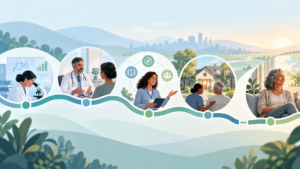
In other words, for most people in this cohort, cannabinoid therapy was not replacing epilepsy care, it was entering an existing treatment journey.
Many participants were already taking antiseizure medications. They had often spent years trying to control seizures, manage medication adverse effects and improve quality of life before adding a cannabinoid product. The study itself reflected that complexity: participants using non-pharmaceutical CBD reported better medication tolerability, fewer prescription medications and better outcomes in areas such as sleep and psychological health, even though researchers did not find a significant difference in seizure control between groups.
That kind of real-world evidence changes the question from: “Cannabis or conventional medicine?” to: “Where does cannabinoid therapy fit within this person’s existing care?”
Newer research is pushing that question even further.
A 2026 Epilepsia study examined 64 adults with drug-resistant epilepsy, including 22 people whose medical records documented cannabis use on at least 20 days per month. Frequent cannabis use was associated with a greater burden of focal-to-bilateral tonic-clonic seizures and greater antiseizure medication requirements.
Those findings deserve attention, but they also reveal how difficult the category “cannabis use” can be to interpret. Researchers did not have consistent information about THC or CBD concentrations, product composition, dose, route of administration or amount used per session. The study was retrospective and cannot establish that cannabis caused greater seizure severity. The authors specifically called for prospective research with better characterization of cannabis exposure.
And that may be one of the most important lessons from the study. That it is no longer enough to ask a patient with epilepsy: “Do you use cannabis?” We need to know:
- What product?
- CBD-dominant, THC-dominant or mixed?
- How much?
- How often?
- Why did the patient begin using it?
- What other antiseizure medications are being taken?
- What changed afterward not only in seizures, but in sleep, cognition, medication burden, adverse effects and quality of life?
The better we characterize real-world cannabinoid use, the better we can separate therapeutic signals from risk, coincidence and the complexity of severe epilepsy itself.
What Has Changed — and What Still Matters
Randomized controlled trials remain essential for determining whether a treatment works. But once a therapy enters the real world, different questions emerge.
Who uses it? At what dose? Alongside which medications? What products do patients actually choose? Can they afford them? And what happens outside the outcomes traditionally captured in a clinical trial?
And those treatment journeys continue to generate new research questions. Realm of Caring recently collaborated with Unlimited Sciences and Lily’s Lighthouse on exploratory research examining Reishi and Lion’s Mane mushrooms among people with epilepsy. The study was preliminary and does not establish these mushrooms as epilepsy treatments. But it reflects a principle that has shaped much of epilepsy research for years:
When conventional treatments do not fully meet patients’ needs, researchers should be willing to carefully investigate what patients are already trying.
Patient experience can identify the question. Science still has to determine the answer. That may be the clearest way to understand what has changed in the CBD-and-epilepsy conversation.
We now have an established medical role for purified CBD in specific epilepsies. Long-term and real-world evidence are growing. Adults are receiving more attention. Researchers are studying additional forms of drug-resistant epilepsy and looking beyond seizure frequency to cognition, sleep, quality of life, medication burden, healthcare utilization and caregiver experience.
At the same time, some fundamentals have not changed.
Epilepsy remains profoundly individual. One cannabinoid formulation does not work for everyone. More is not automatically better. Medication interactions and adverse effects require monitoring. Commercial CBD and cannabis products cannot be assumed to behave like standardized pharmaceutical CBD. Promising observational findings still need rigorous prospective research. And, perhaps most importantly, patients and caregivers still deserve a healthcare team willing to have the conversation.
The story of CBD and epilepsy is no longer one of anecdote versus medicine. It is increasingly a story about how clinical trials, real-world evidence and patient experience can inform one another.
Patients have never used cannabinoids in a laboratory vacuum. The research is increasingly learning to meet them where they actually are: inside an existing healthcare journey.
Considering CBD for Epilepsy?
CBD should not be used as a reason to independently stop or adjust antiseizure medication. Cannabidiol can interact with commonly used epilepsy medications, and appropriate clinical monitoring may include medication levels, liver function and changes in sedation or other adverse effects.
Realm of Caring’s Care Team provides free one-on-one cannabinoid education to patients and caregivers and can help families better understand products, research and questions to bring to their healthcare providers.
You can also explore our Epilepsy & Cannabis Research Library and learn about opportunities to participate in ongoing research; better answers depend on understanding what happens not only in clinical trials, but in patients’ everyday lives.
This article is for educational purposes and is not a substitute for individualized medical advice.